Showing posts with label 4x4 Tours Morocco. Show all posts

Thursday, 8 March 2012

Visit Morocco's Imperial Cities, Sahara Desert & Seaside Resorts, Your Morocco Travel Guide


Visit Morocco where the sun shines 300 days a year. Morocco is one of the ancient intersections of civilization. Boldly situated on the far northwestern corner of Africa, its expansive shoreline stretches from the Atlantic through the Strait of Gibraltar to the Mediterranean. The cultural diversity of contemporary Morocco reflects its historic vantage point  as a gateway to Europe and the world. Morocco’s heritage offers visitors an encounter with an exotic society and its customs, an incomparable cuisine, and a shopper’s paradise of magnificent markets. Visit Morocco and explore it's Imperial Cities, Sahara Desert and Seaside resorts. Visit Morocco and hike, trek, cook, sunbathe. Visit Morocco and indulge in all things Moroccan. Visit Morocco to explore Berber villages and off the beat places. Morocco should be on everyone's bucket list. Make Morocco your next holiday destination!
For more information about a Visit to Morocco

For more information about Travel and Tours to Morocco plus highlights on Moroccan culture visit Morocco’s Imperial Cities,Seaside Resorts,Sahara DesertBerber villagesA Taste of Morocco,Magical Kasbahs, Ruins & WaterfallsAbsolute Morocco, The Best ofMarrakechFes, and Ouarzazate

Discover The Best of Morocco - Travel Exploration
Travel Exploration specializes in Morocco Travel. We provide Tours and travel opportunities to Morocco for the independent traveler and tailor-made tours for families and groups with a distinctly unique flavor. From Morocco’s Seven Imperial Cities, to the Magical Sahara Travel Exploration offers a captivating experience that will inspire you. At Travel Exploration we guarantee that you will discover the best of Morocco! Call Travel Exploration at 1 (800) 787-8806 or 1 (917)703-2078 and let’s book a tour to Morocco for you today.

Tuesday, 9 August 2011

24 Hours in Essaouira, What to See, Where to Eat & What to Do, Your Morocco Travel Guide


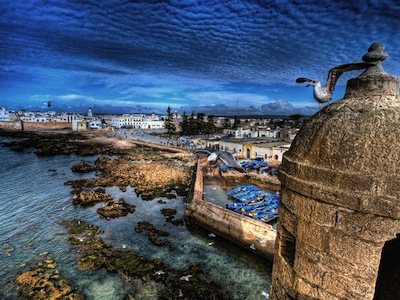
With only 24 hours in Essaouira there is much to see and do in this simply spectacular seaside artist colony. Essaouira offers a wide array of sites and sounds that can fill the pallet of any Moroccan traveler regardless of age. The small coastal town of Essaouira is popular with surfers and has a hippy, laid-back feel – perfect for those who want to spend more time relaxing than bartering. In the ’60s and ’70s,Essaouira was a pitstop on the hippie trek from Marrakesh. Jimi Hendrix made the pilgrimage, as did Bob Marley and Cat Stevens. Essaouira boasts lovely white-washed and blue-shuttered houses, colonnades, thuya wood workshops, art galleries and mouthwatering seafood.

WHERE TO STAY
Madada Mogador feels like someone's home, albeit that of a chic Parisian. Each morning breakfast is served on the riad's large terrace overlooking the beach.

Villa Maroc is an achingly hip Riad and was the first hotel to make riad accommodation popular. Enjoy a laid back stay in the best location, incredible views of the sea or book for dinner and eat mouthwatering Moroccan dishes in one of the cozy candle-lit nooks

Palais Des Ramparts is a charming Riad in the heart of the old medina that offers spectacular views, a hammam along with comfortable rooms for reasonable prices. The staff is accommodating and you cannot beat it's location.
Heure Bleue Palais is the most glamorous address in town (and has been since Jimi Hendrix stayed there). It has a rooftop pool and terrace with views of the harbour, an extensive library and beautiful bar, plus a private screening room. 
   
WHERE TO EAT
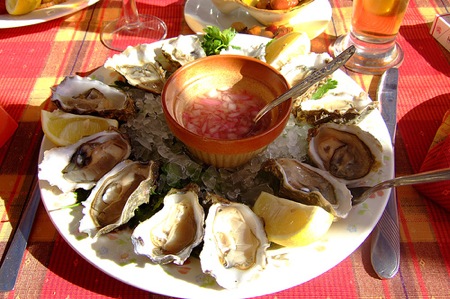
The fish stalls at the port are an essential Essaourian experience. Pick from the catches of the day – anything from sardines to sea urchins – then watch as it's grilled, before eating it with salad and fresh bread. You are guaranteed the fresh catch of the day plus an enormous variety of fish from lobster, shrimp. crab, sea bass, sea brim, scallops, octopus, calamari and local fish as well. All fish is served with the option of being grilled or fried along with salad and bread. This is a must for fish lovers who relish dining by the sea while watching their food being made.  

Elizir is a well-known haunt, where the décor is retro – with 1970s design classics and knick-knacks galore – the atmosphere is relaxed and a Leonard Cohen soundtrack plays away in the background. With its stylistic modern- Moroccan cuisine and décor, Elizer is sure to leave you with a most memorable dining experience during your stay in Essaouira. The menu consists of everything from a camel tagine to home-made pasta via organic kitchen and the catch of the day. Elizer has a fireplace perfect for winter and a roof terrace for summer.

Chez Sam offers stunning views of the sea and is just a ten-minute walk towards the end of the seaport inEssaouira. This restaurant offers excellent seafood for the value. They are one of the more reasonably prices seafood restaurants in this seaside artist colony. The staff is very friendly and they offer wine to compliment the variety of kinds of seafood served. Chez Sam has both an upstairs area to dine which enables guests to enjoy the views of the sea.

Le Sirocco is a well-established Franco-Moroccan restaurant in Essaouira. It is a reliable favorite of returning tourists and local expats alike. Prices are a bit higher than most other restaurants in town, but well worth it. The owners are French and the food is simply delicious. Le Sirocco offers the standard Moroccan fare in addition to specialties such as dark chocolate molten cake and excellent fish dishes. 
Le Chalet De La Plage is an upscale beachfront institution in Essaouira that has some of the best seafood in town. Built entirely of wood in 1893, the restaurant is in its fourth family of proprietors, the Jeannots, and the dark, maritime-theme interior is adorned with pictures and mementos of a past guest list that includes a French president and Hollywood movie stars. Diners feast on items from a French-language menu that offers Oualidia oysters, shrimp, calamari, lobster, and a wide selection of line fish. There's also a small choice of other meats, soups and salads, three-course set menus, and Chez Jeannot's suggestions du jour. A well-stocked bar is complimented by a select wine list, chosen by local vintner Charles Melia.

WHAT TO DRINK
Head to Taros, near the port, for live music and drinks on the terrace. At night the place is full of visiting surfers and a hippy crowd. Le Patio is a dark, atmospheric Moroccan restaurant with a great bar. If you do stay for dinner, the tajines are delicious.  

WHAT TO DO
Madada Mogador runs popular cookery courses at which you can master the art of the tajine, as well as pastillas and couscous. It starts with a guided tour of the spice market, and at the end of the day you share a feast of everything the class has made Ask your Morocco travel agent to arrange a camel ride across the sand dunes – a guide will take you as far as you want to go for about $35.00 each, including taxis to and from the hotel.  

WHERE TO SHOP
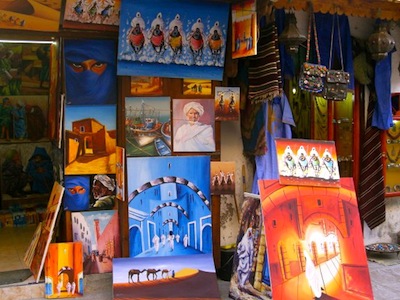
The souks of Essaouira may be smaller than those in Marrakech, but they still provide an interesting experience. The pace is much slower and the bartering isn't quite so aggressive. Look out for the ceramics and rugs, which are particularly beautiful. Seek out the hidden jewels such as art galleries and nouvelle French owned boutiques that sell artistically interesting wears. 

SPA Head to Azur spa for a luxurious take on the traditional hammam. You can choose whether to focus your treatment on toning, detoxing or slimming For more information about an Essaouira Tour For more information about Travel and Tours to Morocco plus highlights on Moroccan culture visit Morocco’s Imperial CitiesSeaside Resorts,Sahara DesertBerber villagesA Taste of MoroccoMagical Kasbahs, Ruins & Waterfalls,Absolute Morocco, The Best of MarrakechFes, and Ouarzazate
Discover The Best of Morocco - Travel ExplorationTravel Exploration specializes in Morocco Travel. We provide Tours and travel opportunities to Morocco for the independent traveler and tailor-made tours for families and groups with a distinctly unique flavor. From Morocco’s Seven Imperial Cities, to the Magical Sahara Travel Exploration offers a captivating experience that will inspire you. At Travel Exploration we guarantee that you will discover the best of Morocco! Call Travel Exploration at 1 (800) 787-8806 or 1 (917)703-2078 and let’s book a tour to Morocco for you today. 

24 Hours in Essaouira, Essaouira Travel Tips, What to See in Essaouira, Where to Eat in Essaouira, Kairouine Mosque Essaouira, Tanneries Essaouira, EssaouiraUNESCO World Heritage site, Madada Mogador, Villa Maroc, Heure Bleue Palais, Taros, Elizer, Chez Sam, Le Sirocco, Chalet De La Plage, Madada Mogador, Morocco Holidays, Morocco Travel, Travel Exploration, Travel to Morocco  

Wednesday, 22 June 2011

Moroccan Doors of Essaouira, Your Morocco Travel Guide


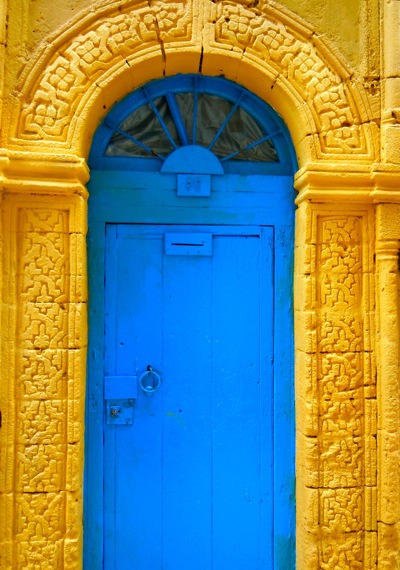
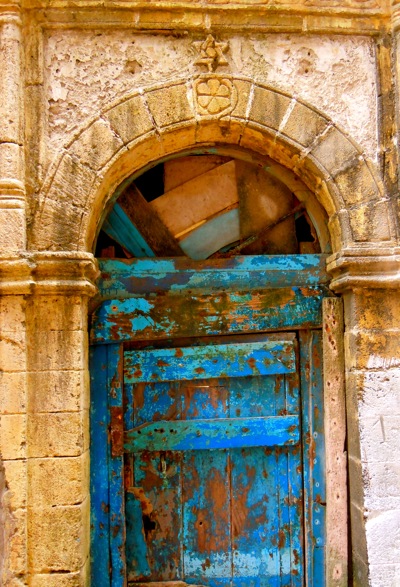
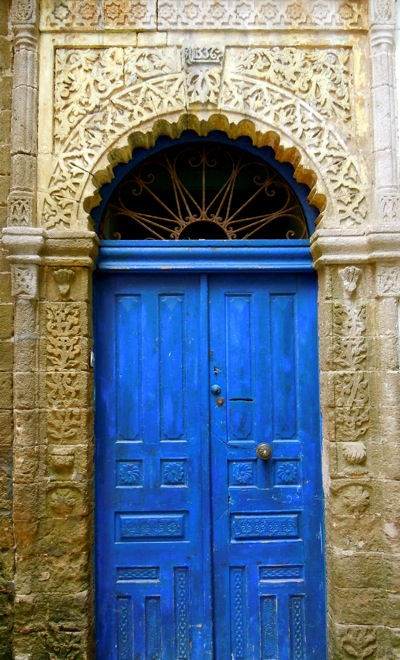
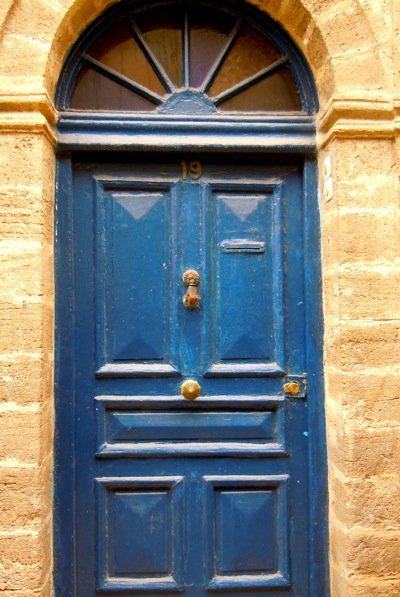
The magic of Morocco is found in many places and one of them is in the hand painted doors of Essaouira. To travel inside Morocco is to visit this vast country one door at a time. Moroccan doors in Essaouira are ordained with Moorish style motifs, chamsa door knockers and painted in a variety of hues such as in Majorelle blue and canary yellow. Doors in Morocco are a gateway to another world and bare emblem of history along with the secret lives in a Moroccan home. Made of wood, metal and plaster Moroccan doors are a photographers dream as they make for the perfect subject matter.

Many of the designs on Moroccan doors' geometrical Moorish and Jewish motifs evoke centuries of history. Moroccans of both Muslim and Jewish decent have lived peacefully together for decades therefore cities like Essaouira, Fes and Marrakech have hallmarks on their doors that range from unique patterns to Jewish stars and are often dated. The doors of Morocco bare both the Moorish and Jewish influence and this can be found especially in Morocco's Jewish mellahs.

Essaouira has a long and rich history which dates back to the 16th century when it was discovered by the Portuguese who named it "Mogador." The Berber name "Mogador" means wall, a reference to the fortress walls that originally enclosed the city. Essaouira was built during the 18th century. Mohammed III decided to oriented the Kingdom of Morocco for change and trade with Europe andchose Mogador as the key location. One of his objectives was to establish a harbour at the closest possible point from the Imperial city of Marrakech. The other was to cut off trade from Agadir in the south. This resulted in the inahabitants of Agadir being forced to relocate to Essaouira.
For 12 years, Mohammed III oversaw a French engineer, Theodore Cornut and several other European architects who built the fortress and city along modern lines. Originally called "Souira," the small fortress, then became "Es-Saouira", the beautifully designed."  Part of those designs remain today in the architecture of the doors found in the old medina.

Moroccan architecture is an eclectic, even cosmopolitan cultural blend that reflects its long and rich history. Morocco’s indigenous people are the Berbers, who farmed the land from at least 2000 BC. Subsequent rulers and invaders included Arabians, the Spanish, the Portuguese and in recent, colonial times, French occupiers. Morocco was declared a French protectorate in 1912, the same year as the painted Henry Matisse came to the Maghreb.

The Hispano-Moorish architectural style of Morocco's doors originated in Spain (in Andalusia), and was taken across the Straits of Gibraltar to Morocco at the behest of the ruling Berber Almoravid dynasty. The Almoravids sent Spanish artisans to Morocco, where they introduced the graceful arches and lofty domes that, along with white walls and green stucco roofs, have become hallmarks of the Hispano-Moorish style. As a result of people being smaller centuries ago doors were smaller and alleyways narrower. Many of the homes in the medinas (old cities) are over 1,000 years old, and a world of history can be found behind each door.
For more information about the doors of Essaouira in Morocco and Essaouira tours
For more information about Travel and Tours to Morocco plus highlights on Moroccan culture visit Morocco’s Imperial CitiesSeaside Resorts,Sahara DesertBerber villagesA Taste of MoroccoMagical Kasbahs, Ruins & WaterfallsAbsolute Morocco, The Best of MarrakechFes, and Ouarzazate
Discover The Best of Morocco - Travel ExplorationTravel Exploration specializes in Morocco Travel.We provide Tours and travel opportunities to Morocco for the independent traveler and tailor-made tours for families and groups with a distinctly unique flavor. From Morocco’s Seven Imperial Cities, to the Magical Sahara Travel Exploration offers a captivating experience that will inspire you. At Travel Exploration we guarantee that you will discover the best of Morocco! Call Travel Exploration at 1 (800) 787-8806 or 1 (917)703-2078 and let’s book a tour to Morocco for you today.
Doors of Morocco, Moroccan doors, Doors of Essaouira, Essaouira, Doors of Fes, Doors of Marrakech, Moroccan architecture, Essaouira architecture, Mogador, Moorish architecture, Berber, Almoravid, Hispano-Moorish architecture, Henry Matisse, Morocco Holidays, Morocco Travel, Travel Exploration, Travel to Morocco

Saturday, 18 June 2011

Morocco's Trade Bead & Jewelry Treasure Hunting Tour, Your Morocco Travel Guide


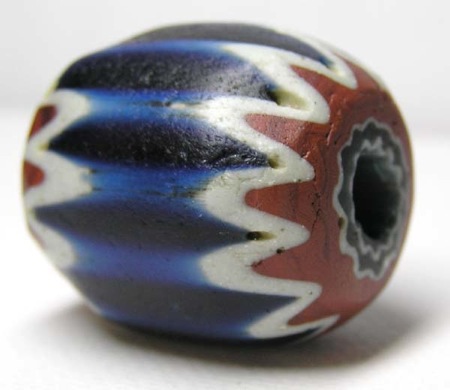
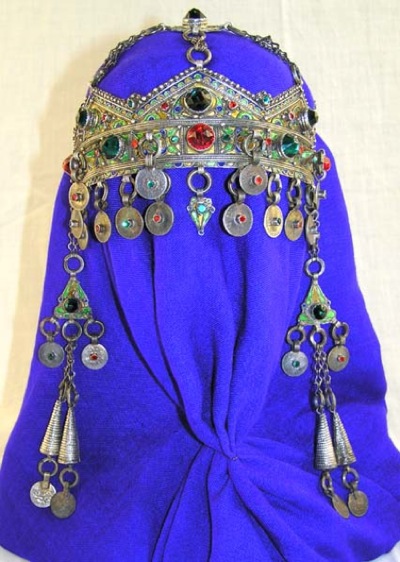
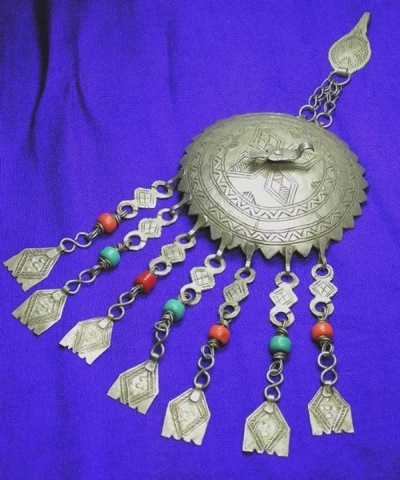
Morocco's Treasure Hunting Tour of North African Silver Jewelry & Trade Beads is on the calendar for Spring 2011. Come Travel to Morocco and enjoy fourteen days of sheer jewelry bliss. Save your Morocco tour dates: September 16th - 29th, 2011. Bead your Way Through Morocco is a Moroccan Jewelry & Trade Bead Treasure Hunting Tour created by Travel Exploration Morocco and hosted by Sarah Corbett, a Tribal Jewelry Expert. Travel Exploration Morocco is a New York and Ouarzazate based Travel Agency and the first to offer this customized Moroccan Jewelry & Trade Bead Tour to Morocco with a Tribal Jewelry Expert. Bead Your Way Through Morocco will take Moroccan antique, trade bead enthusiasts and Moroccan jewelry collectors through a variety on a unique adventure. All jewelry and bead enthusiasts will about the origins of Moroccan Berber, Arab, Sarahwei and Tuareg jewelry, treasure hunt for antique Moroccan silver and trade beads plus newly made pieces. On the Moroccan Treasure Hunting tour your journey includes special opportunities such as taking a Bead making workshop in the city of Tarodaunt, learning the ancient trade routes of beads, a historical overview of Moroccan jewelry and having a first hand expert on hand to help you understand the jewelry you purchase.  

Morocco's Trade Bead and Treasure Hunting tour offers accommodations at Moroccan Riads and the opportunity to experience their fine cuisine. During the Moroccan Treasure Hunting tour enthusiasts will stay at a restored Palace Riad in Marrakech, a peaceful spiraling Riad with views of the sea in Essaouira, a tranquil property in Tarodaunt with bungalows that is surrounded by lush gardens and a modern, Moroccan Kasbah in Ouarzazate with views of the Atlas Mountains. Other options on this once in a life time Moroccan jewelry tour include a visit to Jacque Majorelle's magnificent gardens in Marrakech, the old medina in Essaouira and it's Portuguese ramparts. A visit to the the Valley of Nomads nestled under the Mgoun mountains and the Dades Gorge are also part of this unique program. Book Today! Call 1800-787-8806  or info@travel-exploration.com Don't miss a bead!  
MOROCCAN TREASURE HUNTING TOUR PROGRAM - SEPTEMBER 16th - 29th, 2011
SEPTEMBER 16th: MARRAKECH ARRIVALS - AIRPORT TRANSFER
Airport arrivals in Marrakech. Transfer to Riad Palais Sebban. ►All to meet up at Riad Palais Sebban by 3:00pm. ►Visit the Tiskiwin Museum, a private museum dedicated to popular arts & crafts, styled as a beautiful Spanish-Moroccan house, next door to Dar Si Said palace, a smaller version of the Bahia. ►Tiskiwin Museum Lecture: You will have a first hand viewing of the Tiskiwin and listen to a one-hour lecture and exploration of its history, be shown its private bead and jewelry collection. ►Afternoon treasure hunting. ►Welcome Evening - Appetizers & Drinks at Riad Palais Sebban. A chance to meet your fellow travelers and an overview of the route and the jewels we may find. A display of Tuareg pieces of jewelry with a Tuareg trader on hand to explain the styles and symbolism of the jewelry. ►Spend the night at Riad Palais Sebban.
[
SEPTEMBER 17th: MARRAKECH (9:00am - 2:30pm  OPTIONAL - GUIDED HALF- DAY HISTORICAL TOUR & TREASURE HUNTING)
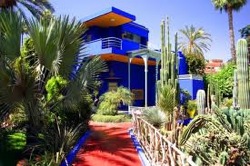
►Breakfast at your Riad. Begin your one-day Historical Tour of Marrakech. ►Your introduction to Marrakech will begin in the new city, we will navigate our way to French, Gueliz and head to the Majorelle Gardens, a magical and lush small garden estate designed by Jacque Majorelle and maintained by Yves Saint Laurent. The Majorelle Garden is filled with colorful walkways, ponds, cactus and plants as well as a beautiful shop with hand-made goods. On our return to your hotel, we will pass by the La Mammounia Hotel Garden (where Alfred Hitchcock wrote the famous film The Birds). ►Visit the 19th Century Bahia Palace, originally built for Si Moussa, a former slave who became King Moulay Hassan's chamberlain. The palace holds a courtyard and riads decorated with and the most beautiful carved stucco, Arabic architecture. Next visit the 16th Century Saadian Tombs and El Mansour mosqueMarrakech is a city of underground channels built by the architects from Cordoba, Spain to provide water for the town and Palmery. ►Next visit the old, Medina, the old quarter of the Marrakech. From here we will explore this historically charming area by foot. In Djemma el Fna, you will visit the famous 12th century Koutouba Mosque and its influential minaret. ►Afternoon treasure hunting in the Souks of Marrakech. ►Spend the night at Riad Palais Sebban.
SEPTEMBER 18th: MARRAKECH - ESSAOUIRA  (12:30pm -2:30pm OPTIONAL - Half-Day Guided Historical Tour) (Driving Time: 2 1/2 Hours)
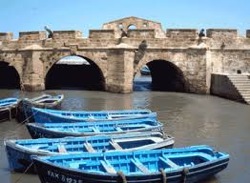
►Breakfast at your Riad in Marrakech. ►Departure for Essaouira in the morning.  Take the road to visit the seaside port of Essaouira. The journey to this former Portuguese fishing village offers up only a few roadside towns and the occasional Berber village. In the ’60s and ’70s, Essaouira was a pitstop on the hippie trek from Marrakesh. Jimi Hendrix made the pilgrimage, as did Bob Marley  and Cat Stevens. Essaouira was the inspiration for Hendrix’s song “Castles Made of Sand.” ►Witness the Argan goats in trees nestling in to eat away at the Argan nuts which are typically used in making Argan Oil, Butter and Cosmetics. ►Arrive in Essaouira. Check into your Hotel. Take a half-day Historical Tour. ► Have lunch at the fish-grill cafes, with wooden tables and benches laid out overlooking the sea. ► The journey to this former Portuguese fishing village offers up only a few roadside towns and the occasional Berber village. In the ’60s and ’70s, Essaouira was a pitstop on the hippie trek from Marrakesh. Jimi Hendrix made the pilgrimage, as did  Bob Marley and Cat Stevens. Essaouira was the inspiration for Hendrix’s song “Castles Made of Sand”.  Visit this sea-side medieval town that boasts lovely white-washed and blue-shuttered houses, colonnades, thuya wood workshops, art galleries and mouthwatering seafood. Once called Mogador by European sailors and traders, Essaouria is known for its annual Gnaoua Music Festival that attracts 300,000+ people in June. It also has an expansive beach for surfing called Plage de Safi. Take a stroll along the town’s sunlit pedestrian main square, Place Prince Moulay el Hassan and the Skala du Port, the fishing harbor, offers breathtaking views of the Portuguese ramparts. Explore the ramparts and the spice and jewelry souks of the medina. The medina of Essaouira (formerly "Mogador") is a UNESCO World Heritage listed city, as an example of a late-18th century fortified town. ► After your historical tour, continue treasure hunting in Essaouira. ►Dinner Recommendations: Taros or El Mer, Essaouira’s top eats with sea views and fresh fish. ►Spend the night at Palais Des Ramparts in Essaouira.
SEPTEMBER 19th: ESSAOUIRA
▶Rise, breakfast at your Hotel. ▶Bead & Jewelry Hunting in Essaouira: Take time out in Essaouira’s old medina to visit the jewelry shops that specialize in antique Venetian beads, Berber Silver, Amber and Copal. ►Dinner Recommendations: Taros or El Mer, Essaouira’s top eats with sea views and fresh fish. ►Spend the night at Palais Des Ramparts in Essaouira. SEPTEMBER 20th:  ESSAOUIRA - TAROUDANT (Driving Time: 6 Hours) ►Rise, have breakfast at your Riad in Essaouira, then take the road to Tarodaunt. ►Dinner and Spend the night at Riad Zitoune Taroudant. SEPTEMBER 21st:  TAROUDANT►Rise, have breakfast at your Riad in Tarodaunt. ►Shop the Souks of Tarodaunt. ►Taroudant is a Moroccan city located in the Souss Valley in the southern part of the country. It is situated east from Agadir on the road to Ouarzazate and south from Marrakech. It has the feel of a small fortified market town on some caravan route. It is also known for its local crafts like jewelry and carpets Taroudant is often referred to as the "Grandmother of Marrakech" because it is a scaled down, slowed down town that resembles Marrakech with its surrounding ramparts. Unlike Marrakech, Taroudant contains almost the whole city within its walls. ►Visit the old medinas’ ramparts with a guided two-hour tour then spend the rest of the afternoon exploring the souk of Taradount and treasure hunting in its shops that are filled with antique silver,  beads and shaded alleys occupied by gentle craftsman and shop owners. ►Dinner and Spend the night at Riad Zitoune Taroudant.
SEPTEMBER 20th: ESSAOUIRA - TAROUDANT

(Driving Time: 6 Hours)

►Rise, have breakfast at your Riad in Essaouira, then take the road to Tarodaunt.

►Dinner and Spend the night at Riad Zitoune Taroudant.


SEPTEMBER 21st: TAROUDANT

►Rise, have breakfast at your Riad in Tarodaunt.

►Shop the Souks of Tarodaunt.

►Taroudant is a Moroccan city located in the Souss Valley in the southern part of the country. It is situated east from Agadir on the road to Ouarzazate and south from Marrakech. It has the feel of a small fortified market town on some caravan route. It is also known for its local crafts like jewelry and carpets Taroudant is often referred to as the "Grandmother of Marrakech" because it is a scaled down, slowed down town that resembles Marrakech with its surrounding ramparts. Unlike Marrakech, Taroudant contains almost the whole city within its walls.

►Visit the old medinas’ ramparts with a guided two-hour tour then spend the rest of the afternoon exploring the souk of Taradount and treasure hunting in its shops that are filled with antique silver, beads and shaded alleys occupied by gentle craftsman and shop owners.

►Dinner and Spend the night at Riad Zitoune Taroudant.

SEPTEMBER 22nd TAROUDANT
►Rise, have breakfast at your Riad in Taradount then take the road to spend an entire day watching the Bead-making Process, rare demonstrations of Bead-making traditions. Lunch during your Bead-Making workshop. ►View The Bead-Making Process: View the bead-making process detail at the workshop where you can create your own jewelry from the beads that you have seen produced that day -  which will be yours to keep as a souvenir of your visit. There will be access to a wide selection of beads available. ►Bead Demonstration Of Rare Bead-making Traditions: During your workshop you will have the opportunity to witness a demo of three different styles of bead making.  Bead making enthusiasts will enjoy this demonstration as it will enable them to view how old traditions are still be practiced, produced and carried on in Morocco. Some of these traditions include utilizing couscous and other original Moroccan traditions to create beads. Travel Exploration Morocco was the first agency to record this “rare” bead-making process and your group will be second to experience it first hand. ►There will be an opportunity to also purchase beads and special silver and other Moroccan Jewelry during your Bead Making Workshop in Taroudant. ►Lunch in Taroudant at La Valla, a local restaurant in Taradount or at the Bead-Making workshop.  After lunch continue Moroccan Bead and Jewelry Treasure Hunting or return to your Riad to relax for the evening. ►Dinner and Spend the night at Riad Zitoune Taroudant.
SEPTEMBER 23rd:  TAROUDAUNT - TAZNAGHT- OUARZAZATE
Breakfast at your Riad. Then take the road to Ouarzazate. En route to Ouarazate, you will stop at the Taliouine Saffron Cooperative. Taliouine is the traditional area of cultivation of saffron in Morocco and has been for hundreds of years.  The Taliouine Souktana cooperative is on the road to Taroudant, in the village of Taliouine, in the heart of Sirwa Mountains. The Taliouine Cooperative sells only a truly biological saffron, cultivated according the traditional ways, with natural fertilizers . The mountains dry climate is ideal for such a culture. After visiting the Taliouine Saffron Cooperative , continue the road to Ouarzazate. Dinner and Spend the night at Riad Dar Chamaa in Ouarzazate.
SEPTEMBER 24th: OUARZAZATE (MORNING JEWELRY SHOPPING & VISIT OF THE ATLAS FILM STUDIO OR OPTIONAL AFTERNOON VISIT OF OUARZAZATE)
►Rise early, breakfast at your Riad and then spend the morning jewelry shopping in Ouarzazate. Lunch near Kasbah Taourirt. ►Discover treasure hunting in this calm, oasis of Southern Morocco that was originally an administrative center during the French Protectuate. Discover jewelry just outside Kasbah Taouirt and in the old market alongside the smells of Berber Amber and Musk. ►Have a walk across from the antique jewelry shops and option to visit Kasbah Taourirt. Kasbah Taorirt was built by the Glaoui. Its location was strategic for trading routes and in the 1930’s when the Glaoui ruled the South it was then one of Morocco’s largest Kasbahs. Explore its nooks and crannies and discover some local female painters who sell their art inside as well as the many quality silver shops just steps outside the Kasbah. ►In the afternoon, visit the Atlas Film Studios. The Atlas Film Studios studios are flanked by Holly-wood style Egyptian figures and cover 30,000 sq m of desert.David Lean filmed Lawrence of Arabiaat The Atlas Film Studios in the early 1960’s. Since then many famous directors have followed in his footsteps to exploit the magnificent scenery. International blockbusters shot here in recent years include: the French version of Cleopatra, Bertolucci’s Sheltering Sky, Scorsese’s Kundun,Gillies MacKannon’s Hideous Kinky, Ridley Scott’s GladiatorBlack Hawke Down, Oliver Stone’s Alexander The Great, Ridley Scott’s Kingdom of Heaven, and Penelope Cruz’s Sahara. Most of the filming takes place in the desert in the south however you can view the Tibetan monastery featured in Scorese’s Kundan and an Egyptian temple from Cleopatra. This ends your Morocco Travel experience. ►Dinner & Spend the night at Riad Dar Chamaa.

SEPTEMBER 25th: OUARZAZATE (JEWELRY SHOPPING)
►Rise early, breakfast at your Riad and then take the road to visit the Ouarzazate region and its famous Kasbahs.Jewelry Shopping and Explore Ouarzazate. Dinner at La Kasbah Des Sables in Ouarzazate. Le Kasbah Des Sables is a gastronomic experience with a menu that combines the cuisine of Fes, Meknes, Tangier, Arab and Berber with first class fare.  This restaurant offers a museum- quality atmosphere as its’ decor has been hand stitched together and is filled with Berber, Morocco traditional furniture and art that was hand crafted by local artisans in the Ouarzazate region. Each section of the restaurant offers an intimate environment and the opportunity to eat on tables that are hand painted and adorned with silver fibulas, Amber and other regional jewels. ►Spend the night at Riad Dar Chamaa.
SEPTEMBER 26th: OPTION EXCURSION TO THE VALLEY OF ROSES - VALLEY OF NOMADS - DADES VALLEY OR RELAX AT THE RIAD OR CONTINUE JEWELRY SHOPPING (Driving Time: 2 1/2 Hours)
►Breakfast at your Riad. Take the road to visit Bouthgrar, the Valley of Nomads and the Dades Valley. En route visit Kasbah Amerdihl in Skoura and it’s one thousand Kasbahs and palmary. ►Begin your visit at the breakthtaking Valley of Nomads Located in Bouthgrar is the Valley of Nomads, a beautiful 10 kilometer valley where Nomads live in caves that are surrounded by Mount Mgoun. Mount Mgoun is the second highest mountain in Morocco and boasts extraordinery views. Have tea with a Nomad family.  See first hand where they make their own carpets and co exist in Bouthgrar with other Nomad families. ►Your journey will then take you through theDades Valley which covers 125 km between Ouarzazate and Boumalne du Dadès in the High Atlas Mountains. ►Once you reach Boumalne at first sight you notice the limestone cliffs with uniquely shaped erosions and superb scenery and the valley’s pise (windy roads). Driving along you will pass flower filled fields, fertile fields, riverbanks and several fortified ksours. At the bottom of Gorge of Boumalne Dadès there are ruined hilltop Kasbahs and valley floor gardens. ►Lunch will be served at a nearby guesthouse that offers local Moroccan fare and a panoramic view. Relax and sip mint tea while gazing at the impressive valley view. ►Dinner & Spend the night at Riad Dar Chamaa.

SEPTEMBER 27th:  OUARZAZATE - MARRAKECH
►Rise, have breakfast at your Riad and then take the road to Marrakech. ►“See Ouarzazate and die” are feelings often expressed by Moroccans with regards to this magical city that is the door to the Sahara Desert. Located just four hours from Marrakech, Ouarzazate is the main Berber city in the south known for its spectacular sunsets and dramatic mountain and desert scenery. Surrounded by breathtaking valleys, Ouarzazate was once crossing point for African traders seeking to reach northern cities in Morocco and Europe. During the French period, Ouarzazate expanded considerably as a garrison town and became the administrative centre of the Zagora region. Ouarzazate became famous when it’s nearby Kasbah; Ait Benhaddou appeared in the 1962 filmLawrence of Arabia. ► Then take the road to Ait Benhaddou. Located 32 km from Ouarzazate lies the picturesque village. Aït Benhaddou of Aït Benhaddou is situated in Sous-massa Draon a hill along theOuarzazate RiverLawrence of Arabia was filmed here and Orson Welles used it as a location for Sodome and Gomorrah; and for Jesus of Nazareth the whole lower part of the village was rebuilt. In recent years more controlled restoration has been carried out under UNESCO auspices. Aït Benhaddou is one of many locations in this region used for shooting Hollywood films. Aït Benhaddou which once served as the former caravan route between the Sahara and Marrakech in present-day Morocco. Most of the town's inhabitants now live in a more modern village at the other side of the river; ten families however still live within the ksar.  Your guide will lead you on a private tour through this Berber village of towered and crenulated Kasbahs that once guarded the lucrative caravan route through the Atlas Mountains. Explore the Kasbahs by foot with the option to ride a donkey across a river. Aït Benhaddou which once served as the former caravan route between the Sahara andMarrakech in present-day Morocco. Most of the town's inhabitants now live in a more modern village at the other side of the river; ten families however still live within the ksar.  Enjoy lunch at a Kasbah that overlooks Ait Benhaddou. Next, visit Kasbah Taouirirt. Kasbah Taorirt was built by the Glaoui. Its location was strategic for trading routes and in the 1930’s when the Glaoui ruled the South it was then one of Morocco’s largest Kasbahs. Explore Kasbah Taouirirt’s nooks and crannies and discover some local female painters who sell their art inside as well as the many quality silver shops just steps outside the Kasbah. ►During your journey toMarrakech you will also pass the olive groves of the Oued Zat, as you ascend onto the Tizi-N-Tichka PassRoad. Built by the French in the 1920’s, the Tizi-N-Tichka Pass can be described as having mountainous barriers, Mediterranean and oceanic influences and desert borders. long the route you will see panoramic views of the High Atlas Mountains as well as sights of fertile valleys, blue and red colored pise villages and other striking mineral environments. ►En route stop for lunch and visit the Argan Cooperative where Argan Oil, Butter and Cosmetics are made with the Argan nut by hand as Berber women crack the nuts and the grind them one by one. Have a complimentary tasting.  This cooperative is run entirely by women. Lunch in the village of Tadart. ►Arrive in Marrakech. Evening Free. ►Spend the night at Riad Palais Sebban in Marrakech.

SEPTEMBER 28th: MARRAKECH (JEWELRY SHOPPING & EXPLORATION)
►Rise early, breakfast at your Riad. Free Day to Shop the Souks of Marrakech for the special Moroccan Beads and Jewelry you missed out on the first time around. ►Sarah Corbett is available by arrangement for morning shopping guidance. ►Jewelry & Treasures of Marrakech Viewing: Evening viewing at a celebrated Jewelry store in the Spice markets of Marrakech.  Enjoy a two- hour viewing of fabulous beads, jewels and local silver pieces available for purchase and historical discussion about the origin and meaning of these pieces. ►Spend the night at Riad Palais Sebban in Marrakech.
SEPTEMBER 29th: MARRAKECH MENARA AIRPORT DEPARTURES:
▶Breakfast at your Riad. Departure from Marrakech’s Menara Airport.
ALL AIRPORT DEPARTURES from Riad Palais Sebban

________________________________________________________
COST PER PERSON: $4,325 USA /2,675 GBP / 3,030 EUROS
SINGLE SUPPLEMENT: $950 USA /652GBP /579 EUROS
Sarah Corbett, North African Jewelry Expert & Bead Tour Host Treasure Hunting in Agdz  
Discover The Best of Morocco - Travel ExplorationTravel Exploration specializes in Morocco Travel.We provide Tours and travel opportunities to Morocco for the independent traveler and tailor-made tours for families and groups with a distinctly unique flavor. From Morocco’s Seven Imperial Cities, to the Magical Sahara Travel Exploration offers a captivating experience that will inspire you. At Travel Exploration we guarantee that you will discover the best of Morocco! Call Travel Exploration at 1 (800) 787-8806 or 1 (917)703-2078 and let’s book a tour to Morocco for you today. Moroccan jewelry, Trade beads, Berber jewelry, Tuareg jewelry, Saharwei jewelry, antique Moroccan silver, silver jewelry, Customized Bead making tours, Ethnic jewelry, Ethnic jewelry tours, Moroccan amber, Moroccan beads, Moroccan copal, Moroccan fibula, Tuareg silver crosses, Sarah Corbett, Vivid Trading, Moroccan jewelry shopping, Morocco Holidays, Morocco Travel, Travel Exploration, Travel to Morocco

Thursday, 16 June 2011

Argan Oil & Goats in Trees, Your Morocco Travel Guide


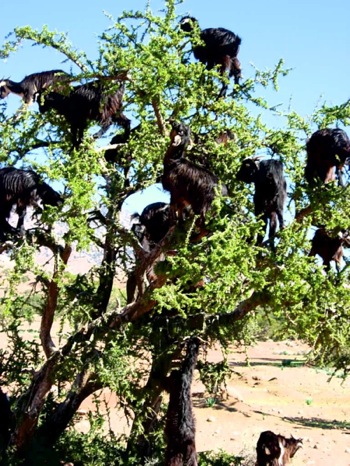
The first time I visited Morocco, I saw postcards that featured goats perched in Argan trees. Sure, I thought, this is a gag. Surely they must have either tied stuffed goats to branches or retouched photos. So the first time I visited Argan Country, near Essaouira and Agadir, boy, was I surprised. There were real goats in the trees! Munching away! I soon found out that was going on. The goats were exclusively found in argan trees.

[
Argan is a relative of the olive, and the goats were eating the argan fruit. Argan is grown exclusively in the southwest region of Morocco. It is difficult to cultivate and as a result, wild trees are treasured. Argan oil is prized in Morocco and recently has been discovered by the West. It has been used for centuries for cooking and cosmetics. The oil is extracted from the kernel of the pits.

There are many women’s cooperatives in the region that help poor women with employment and educate their children as well. It is fascinating to see how experienced “crackers” take the small pit (imagine an olive pit), set it against a large stone and with another small stone, cracks the pit open in one try. I’ve tried it and got a bloody thumb as my reward! Then the kernels are ground into a past with the oil running out. You can see this is a very tedious and time-consuming procedure that accounts for the high price of argan products.


The gustatory oil is delicious with a nutty, smoky flavor (due to roasting). It is used as a finishing oil for salads or fish or as a bread dip. According to Wikipedia, Argan oil is exceptionally rich in natural tocopherols (vitamin E), rich in phenols and phenolic acid, rich in carotenes, rich in squalene, rich in essential fatty acids, 80% unsaturated fatty acids  and depending on extraction method more resistant to oxidation than olive oil.

I love argan oil and always have a jar or two in my refrigerator where it keeps indefinitely.
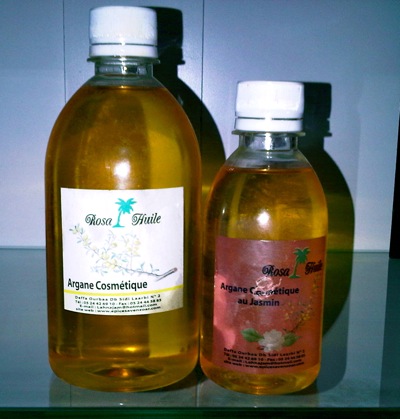
The cosmetic industry uses argan oil in hair products all sorts of skin care products and lotions. It is often scented with rose, jasmin, or almond extracts. Unroasted oil is used traditionally as a treatment for skin ailments such as excema.
Now that I have visited the region many times, I am still delighted when we come across goats in trees and always stop to take pictures. You would too!

By Freya Ellinwood, Morocco Travel Writer

For more information about Travel and Tours to Morocco plus highlights on Moroccan culture visit Morocco’s Imperial CitiesSeaside Resorts,Sahara DesertBerber villagesA Taste of MoroccoMagical Kasbahs, Ruins & WaterfallsAbsolute Morocco, The Best of MarrakechFes, and Ouarzazate

Discover The Best of Morocco - Travel ExplorationTravel Exploration specializes in Morocco Travel.We provide Tours and travel opportunities to Morocco for the independent traveler and tailor-made tours for families and groups with a distinctly unique flavor. From Morocco’s Seven Imperial Cities, to the Magical Sahara Travel Exploration offers a captivating experience that will inspire you. At Travel Exploration we guarantee that you will discover the best of Morocco! Call Travel Exploration at 1 (800) 787-8806 or 1 (917)703-2078 and let’s book a tour to Morocco for you today.

Moroccan Argan Oil, Argan Oil, Argan Nut, Argan Goats, Essaouira, Agadir, Argan goats in trees, Argan cosmetics, Argan oil for cooking, Argan trees, Argan cooperative, Morocco Holidays, Morocco Travel, Travel Exploration, Travel to Morocco

Thursday, 31 March 2011

Fes, Morocco World Music Festival Tour Package, With Travel Exploration, Your Morocco Travel Guide


Travel Exploration & Authentic Asia Present The Fes Festival of World Sacred Music & Morocco Cultural Tour - Hosted by Music Expert, Joel Davis

This 13 Day/ 12 Night Morocco Fes Music Festival Tour will offer a celebratory opportunity for those who are passionate about Sacred World Music to enrich their palate with a variety of international sounds ranging from Andalusian Classical music to African, Asian, Moroccan Sufi and more while taking a journey across Morocco’s Imperial Cities, Majestic Landscapes, the Sahara Desert and Valley’s. This all inclusive 13 Day/12 Night Morocco Private group tour guarantees combined 4/5 Star accommodations at charming Riads and luxury Moroccan hotels and properties, private transport, historical guides, museum and monument entrance fees along with tickets to the Fes Festival of Sacred World Music.  Don't miss out on this special opportunity to travel to Fes, Morocco and other regions such as Marrakech, Ouarzazate and the Sahara Desert with a music guide and historical guides who will bring depth and understanding to the meaning of Morocco's music and vast cultural traditions.

Fes is a UNESCO World Heritage site and the oldest world medina (old city) in the world. Come join our private group and participate in seeing renowned musicians from all over the world gather in Fes -- Morocco's spiritual capital. Travel Exploration's private tour package includes a music guide, historical guides, daily sight-seeing tours in air-conditioned luxury minibuses or 4x4 land cruiser with multi-lingual speaking drivers that are fluent in English, Arabic, French and Berber. Also included are tickets to the Fes Festival performances in Morocco's holy city of Fes. For more information on the 17th Edition of the Fes Festival World Sacred Music program.

Artists from around the world flock to Morocco's spiritual capital during the annual Fez Sacred Music Festival. The top music artists from Middle Eastern and Western religious communities gather in Fez for a week of concerts, lectures, exhibitions, and intellectual and artistic exchanges. Performances have included the Sufi Whirling Dervishes of Turkey, Berber trance music, Arab-Andalusian music, Hindustani chants, Celtic sacred music, Christian Gospel, flamenco, and the Philharmonic Orchestra of Morocco, with French classical musicians always proving popular. There has also been Sufi artists from India and Pakistan, Japanese drumming bands and a group of vocalists from Mali.


DAY 1:  CASABLANCA ARRIVAL - RABAT- FESArrival at Casablanca International Airport.
►Have breakfast upon arrival, then visit the Mosque of Hassan II. Casablanca is home to the Hassan II Mosque, designed by the French architect Michel Pinseau. It is situated on a promontory looking out to the Atlantic, which can be seen through a gigantic glass floor with room for 25,000 worshippers.Its minaret is the world's tallest at 210 meters. It is an enormous architectural masterpiece and the second largest religious building in the world. On Fridays, the Mosque of Hassan II is open to non-Muslims.The Mosque of Hassan II's promontory offers lovely views overlooking Casa in the residential Afna quarter.
►After visiting the Hassan II Mosque, take the road to Rabat for a half-day tour of this Imperial City.
►During your half-day tour you will learn Rabat's history and enjoy its beautiful domes, minarets, wide avenues and green spaces. Your guide will escort you on a walk around the picturesque Almohad northern walls of the Oudaïa Kasbah. The kasbah was built by Moulay Ismaïl from 1672-1727 to protect the city and is enclosed by ramparts dating from the Almohad period. Visit Bab Oudaïa, a monumental gate and example of Almohad military architecture. See the Musée de Oudaïa, Moulay Ismaïl's palace exhibiting collections of Moroccan folk art. Before moving on to city medina, relax in the Moorish style Andalusian garden.
►Visit the Royal Palace, the Hassan Tower which stands on the hill overlooking the Wadi Bou Regreg. It is a gigantic mosque, emblematic of Rabat and famous for its unfinished minaret where storks nest.
►Next door, visit the beautiful Mausoleum of Mohammed V decorated with stained glass windows, white marbleand a wrought-iron entryway with a stairway leading to an impressive dome.
►Lunch in Rabat, by the Sea.
►Explore the gardens nearby and visit the Palace of Rabat and visit the Necropolis at Chellah/ Kasbah of Chellah.
►Dinner & Spend the night at a 4 Star Charming Riad or Hotel in Fes.


DAY 2:  FES (GUIDED HISTORICAL TOUR)

►After breakfast your day will begin at the Merenid Tombs of Fès.
►Next, stop at the Musée des Armes, a fortress that once protected Fès. Today it is possible to see a display of 8,000 pieces of artillery from Makina, the arsenal built by Moulay Hassan I.
►Enter the Fès el- Bali through the symmetrical horse shoe arches at Bab Boujeloud (The Blue Gate). Fès -el Bali, best characterized as a sea of rooftops embellished with minarets and domes, is too narrow for cars. Aside from walking, donkeys and mules are still the best way to travel within the cities old walls.
►Upon entering Rue Talaa Kebira, the main street in the medina, you will see lines of shops covered by canopies. Make your way to the Karaouiyine Mosque. Located in the Karaouiyine quarter, the Mosque is one of the oldest in the world and functioned as the first university in Morocco. After your visit, continue along the streets which will lead you to some of Fes' most important buildings including Dar el- Magana, a fourteenth century water clock and Zaouia el Tijaniya, containing the tomb of Ahmed el Tijani, who spread his infamous doctrine Tariqq el- Tijaniya (The Way) throughout Morocco.
►We will also stop to visit the Ech Cherabliyine Mosque (Mosque of the Slipper makers) then browse the souks selling henna, slippers, caftans, silks, jewelry and spices.
►Next onto the UNESCO recognized site, Fondouk el- Najjarine. Within the foundouk's three floors is the Musée de Bois, which displays carved doors from the Bou Inania Medersa.
►Stop for lunch within the medina at one of the fine Moroccan palace-restaurants that serves an extravaganza of mezas for lunch.
►After lunch we will visit the Musée Dar el- Batha to view the great collection of pottery, leather-work, wood, books and manuscripts from the nineteenth century.
►Next, enter Bab el Ftouh, the "Gateway of the Aperture" to explore the Andalusian quarter, a residential part of the medina laced with monuments. Our last part of the tour will take you into the Fès el Jedid, a kasbah which functioned as Morocco's administrative center until 1912. Explore the royal palace and many interesting quarters including the Moulay Abdalllah Quarter, the Mellah (Jewish Quarter) and a little farther down south lies Ville Nouvelle (The New Quarter).
Within the Fes medina, we will the following historical sites:
Medersa Bou Inania: An (Islamic school) founded by Abu Inan Faris that is highly decorated from floor to ceiling. The medersa is one of the few religious places in Morocco that is accessible to non-Islamic tourists.
Kairaouine Mosque: Morocco's second largest mosque was built by Fatima in 857. The Kairaouine Mosque became the home of the West's first university and the world's foremost center of learning at the beginning of the second millennium.

University of Al-Karaouine: Founded in 859, this university is one of the leading spiritual and educational centers of the Muslim world and is considered the oldest continuously operating institution of higher learning in the world.
Zaouia Moulay Idriss II: A zaouia (shrine) dedicated to and the tomb of Moulay Idriss II, who ruled Morocco from 807 to 828 and founded the city of Fès for the second time in 810.
Dar Batha: A Hispano-Moorish palace dating from the end of the 19th century that houses admirable collections of traditional art from Fès.
Weavers Cooperative: We will also visit the Weavers Cooperative located in a residential neighborhood off a main shopping street. The workshop specializes in weaving the finest jellaba fabric, made of silk and wool threads imported from Italy. The shop also makes a quality jellaba fabric from locally spun, textured wool thread called hubba -sometimes referred to as couscous, because it’s nubby texture resembles Morocco's national semolina dish of the same name.
Tanneries: The Chourara or the Tanner’s Quarters is the most lively and picturesque souks in Fès. The Tanneries are often located near watercourses like the Wadi Fès and at a distance from residential areas due to the strongly unpleasant smells they produce.
Carpet Demonstration: Antique and Modern Carpets is one of the places in Fès el Bali where you can see a Berber carpet demonstration. You will be offered mint tea and follow your guide up a coil of stairs to a small area to watch carpets being made by young girls who come from the mountains to show tourists how Berber carpets are made.
Dyers Market: The dyers market, located along Rue de Teinturies, is the best place to see the dying vats which have been used for centuries to soak the skins of sheep, goat, cows and camels after they have their hair and flesh removed is best seen from the neighboring terraces. You will see many tanned hides colored with natural pigments ranging from shades of brown, black, turquoise fuchsia, yellow and orange.
Potter's Cooperative: You will also visit the Potter's Cooperative. Also known as Place el-Seffarine, this kisseria is the most important center for the production Fasiss style ceramics, brass-ware and silverware in Morocco.
►Welcome Dinner at Le Maison Bleue,  an exotic and fine Fasis restaurant in the Old Medina with a quaint show of Gnaoua Music as you dine.
First night- showcase of the Fes Festival of Sacred Music’s sites and sounds at the Bab Makina in Fes.
►Spend the night at a 4 Star Charming Riad or Hotel in Fes.


DAY 3:  FES - MEKNES - VOLUBILIS
►Breakfast at your Hotel in Fes. Then take the road to Meknes.
►Arrive in Meknes. Begin your visit at the 18th Century Palace built by Sultan Mohammed Ben Abdallah.
►Then pass through the triumphal arch. Standing at sixteen meters high with an eight meter long arch, the intricately patterned triumphal arch is argued to be the most beautiful in Morocco. Enter Place El-Hedime (Square of Ruins) which links the medina and the kasbah. The square is lined with modern residential buildings and a covered food souk (market).
►We will stop and visit the Musée Dar Jamaï, a museum showing modern Moroccan arts, woodwork, ceramics, carpets, costumes, jewelryand metalwork. The sophisticated building was once a palace incorporating a mosque, menzah (pavilion), courtyard, kitchen and hammam.
►Next we will visit the Bou Inania Medersa to explore the beautiful Koranic school established by the Merinids in the 14th century. Opposite of the Medersa, see the Grand Mosque.
►Among the most impressive elements of this imperial city is the grand gate named after the architect, El-Mansour, a Christian renegade who converted to Islam. The design of the gate plays with Almohad patterns. It has zellij mosaics of excellent quality. The marble columns were taken from the Roman ruins of Volubilis.
►Lunch in Meknes.
►After visiting Meknes, take the road to explore the breathtaking archaeological site of Volubilis (Walili). Once occupied by the Romans, Volubilis has been recognized by UNESCO as a world heritage site and gained international acclaim when Martin Scorsese made it a feature location for his film, The Last Temptation of Christ.
►Begin your visit by discovering the fascinating Roman ruins adorned with beautiful mosaics and colorful tiles depicting Roman mythology. The ruins are spread out across several acres and what remains visible is several fragments of wall, parts of massive columns, the capitol, the basilica and a triumphal arch. The ruins reveal how the Roman Empire transformed the original Carthaginian settlement into a typical Roman city complete with mansions, a town center, a triumphal arc and temples devoted to the Roman gods.
►Enjoy tea at the small café that sits just below the Volubilis ruins. Next explore the open-air museum with remains of altars, sculptural fragments and colorful mosaics.
►Commence your visit in Volubilis, then take the road to Fes.  Arrrive in the evening.
Second night- showcase of the Fes Festival of Sacred Music’s sites and sounds at the Bab Makina in Fes.
►Spend the night at a 4 Star Charming Riad or Hotel in Fes.


DAY 4:  FES (FASIS POTTERY COOPERATIVE, SIDI HARAZEM SPA & FREE EXPLORATION)

►Rise, have breakfast at your Riad, then stroll the Jnan S'bil Garden, a popular botanical garden in Fes where locals frequent for morning and afternoon walks, to read a book or relax. Jnan S'bil Garden has been closed for several years for a reservation and it is re-opening spring 2010.
►Next, visit Fes’ renown Pottery Cooperative where you can view how the Fasis pottery and zellij tile are made by hand. Tour the cooperative to see how the various artisans work using the ancient Fasis techniques that are unique to this Imperial city and region. Participate if you wish by throwing a pot or starting to make your own zellij tile. See the works of the artisans which are available for purchase as well.
►After visiting the Fasis Pottery Cooperative enjoy the rest of the afternoon visiting other sites on your own or exploring the old Fes medina cobble stoned streets or consider a visit to a Spa just outside of Fes.
►Fes, is believed to be the world's largest contiguous car-free urban area and you will be able to roam free, only having to move aside for the donkeys that will need to pass bringing goods across from place to place.
►If roaming around Fes on your own is not of interest, then take the road to visit Sidi Harazem, a Spa and green area just outside of Fes which contains hot water springs that are rich in magnesium. The benefits of these curative waters may be enjoyed at the health spa.There is also an ancient sacred pool surrounded by eucalyptus, palm and pink laurel trees.
►The other option is to visit Moulay Yacoub an old French, style Spa with thermal stations, cold dipping pool along with rock hot saunas and steam rooms. Compliment your visit with an old world, French- Moroccan massage with rose, orange or jasmine oil, receiving a treatment from head to toe.

►Dinner options are at your Riad, in the Ville Nouvelle (new city), Le Palais D’Medina or Le Maison Bleue.
Third night- showcase of the Fes Festival of Sacred Music’s sites and sounds at the Bab Makina in Fes.
►Spend the night at a 4 Star Charming Riad or Hotel in Fes.


DAY 5:  FES - ZIZ VALLEY - IFRANE- MERZOUGA

►Rise, have breakfast at your Riad. Then take the road to Merzouga. Enroute to Merzouga, we will passIfrane, stopping to see the cedar tree forrest and the local barbary monkeys.  We will also pass the American- Moroccan University which was built by the Saudi’s.
▶ We will have lunch during our journey in the Ziz Valley or at another local town en route to the Sahara desert. We will continue the road to Merzouga and arrive before sunset.
▶Arrive in Merzouga before sunset, then go by dromedary camel for 45 minutes- one-hour, at sunset into the Erg Chebbi Dunes to camp overnight luxury Biouvac tent at an oasis.  Your Tuareg guide will share some of the Sahara Deserts’ secrets. As you glide across humpback on these silent, mystical dunes there will be countless opportunities to photograph the endless rolling dunes.
Dinner & Spend the night at a Charming Bivouac near an Oasis within the Erg Chebbi Dunes of Merzouga’s Sahara Desert with traditional Entertainment in a Majestic 1001 Nights Tent. - Guest House Option Available For Those Who Prefer.


DAY 6: MERZOUGA - RISSANI- ERFOUD -N’KOB -OUARZAZATE

▶Rise, have breakfast and take a sunrise trek back to Merzouga center. Enjoy the flora and fauna that is unique to the Sahara. Then take the road to visit the Saharan Desert towns of Rissani and the capital of fossils, Erfoud. Visit the old ksars and then continue the road to the village of Ait Ouzzine, located in N’kob which is nestled within the Middle Atlas Mountains.
Aït Ouzzine is a Berber village inhabited by over 300 families who live in beautifully painted crenulated kasbahs, with their own henna fields, water wells, livestock and gardens. This peaceful village is tucked away along an impressive desert route connecting the Draa Valley (Tansikht) and Rissani.
Lunch will be served to you in Aït Ouzzine by a traditional Berber, Moroccan family. The menu will include a traditional meal of fresh baked bread with spices and a chicken and vegetable tajine and fresh local fruits for desert.  After lunch, you can have your hands and feet painted with henna or your hair adorned with saffron by a local village artist and relax.  Experience the tradition of Berber perfume made from musk and amber along with the villages own spices.
►End the afternoon in Ait Ouzzine with mint tea and almonds.  Take the through the Draa Valley back to Ouarzazate before sunset.
►The Draa Valley is the road of the old caravans that were once traveled to transport dates and other good from the Draa Region to Marrakech. Arrive and have dinner at your Riad.
►Dinner & Spend the night at a 4 Star Charming Riad or Hotel in Ouarzazate.


DAY 7: OUARZAZATE ANCIENT KASBAHS
►Breakfast at your Riad.    “See Ouarzazate and die” are feelings often expressed by Moroccans with regards to this magical city that is the door to the Sahara desert. Located just four hours from Marrakesh,Ouarzazate is the main Berber city in the south known for its spectacular sunsets and dramatic mountain and desert scenery. Surrounded by breathtaking valleys, Ouarzazate was once crossing point for African traders seeking to reach northern cities in Morocco and Europe. During the French period, Ouarzazate expanded considerably as a garrison town and became the administrative centre of the Zagora region. Ouarzazate became famous when it’s nearby Kasbah;  Ait Benhaddou in the 1962 filmLawrence of Arabia.
► Visit the Oasis of Fint, the Atlas Film Studios, Aït Benhaddou & Kasbah Taouirt.
► Take the road to the Oasis of Fint that hovers under the Atlas Mountains. Journey on a one-hour walk inside the Oasis where you will have a cup of tea with the headmasters family Azziz Ouaziz and tour the surrounding area where date palm oases and dramatic desert scenery are king.
► After visiting the Oasis of Fint we will take the road to the Atas Film Studios. David Lean filmedLawrence of Arabia at The Atlas Film Studios in the early 1960’s. Since then many famous directors have followed in his footsteps to exploit the magnificent scenery. International blockbusters shot here in recent years include: the French version of Cleopatra, Bertolucci’s Sheltering Sky, Scorsese’s Kundun, Gillies MacKannon’s Hideous Kinky, Ridley Scott’s Gladiator, Black Hawke Down, Oliver Stone’s Alexander The Great, Ridley Scott’s Kingdom of Heavenand Penelope Cruz’s Sahara.
► Next visit Aït Benhaddou. Aït Benhaddou is located 32 km from Ouarzazate lies the picturesque village. Aït Benhaddou of Aït Benhaddou is situated in Souss-Massa-Draâ on a hill along the Ouarzazate RiverLawrence of Arabia was filmed here and Orson Welles used it as a location for Sodome and Gomorrah; and for Jesus of Nazareth the whole lower part of the village was rebuilt. In recent years more controlled restoration has been carried out under UNESCO auspices. Aït Benhaddou is one of many locations in this region used for shooting Hollywood films. This Berber village of towered and crenulated Kasbahs that once guarded the lucrative caravan route through the Atlas Mountains. 
Lunch on a terrace with clear views of Aït Benhaddou and enjoy a traditional Moroccan or Moroccan salada and a hearty tajine.
► End the day with a short visit to Kasbah Taouirt which was was built by the Pasha GlaouiKasbah Taouirt’s location was strategic for trading routes and in the 1930’s when the Glaoui ruled the South it was then one of Morocco’s largest Kasbahs. Explore its nooks and crannies and discover some local female painters who sell their art inside as well as the many quality silver shops just steps outside the Kasbah.
►Dinner & Spend the night at a 4 Star Charming Riad or Hotel in Ouarzazate.


DAY 8: OUARZAZATE - BOUTHGRAR (VALLEY OF NOMADS), VALLEY OF ROSES,  BOUMALNE DADES VALLEY & GORGE - SKOURA

►Breakfast at your Riad. Take the road to visit Bouthgrar, the Valley of Nomads and the Dades Valley.
►Begin your visit at the breakthtaking Valley of Nomads Located in Bouthgrar is the Valley of Nomads, a beautiful 10 kilometer valley where Nomads live in caves that are surrounded by Mount Mgoun. Mount Mgoun is the second highest mountain in Morocco and boasts extraordinery views. Have tea with a Nomad family.  See first hand where they make their own carpets and co exist in Bouthgrar with other Nomad families.
►Your journey will then take you through the Dadès Valley which covers 125 km between Ouarzazateand Boumalne du Dadès in the High Atlas Mountains.
►Once you reach Boumalne at first sight you notice the limestone cliffs with uniquely shaped erosions and superb scenery and the valley’s pise (windy roads). Driving along you will pass flower filled fields, fertile fields, riverbanks and several fortified ksours. At the bottom of Gorge of Boumalne Dadès there are ruined hilltop Kasbahs and valley floor gardens.
►Lunch will be served at a nearby guesthouse that offers local Moroccan fare and a panoramic view. Relax and sip mint tea while gazing at the impressive valley view.
►Dinner & Spend the night at a 4 Star Charming Riad or Hotel in Ouarzazate.


DAY 9: OUARZAZATE - MARRAKECH
►Rise early, breakfast at your Riad and then take the road to Marrakech.
▶En route you will go by piste to visit Kasbah Telout, one of Morocco’s hidden jewels and a famous Kasbahs that is the origin of the Pacha Glaoui Family. Kasbah Telout is hidden among a tiny road in a small village that is 20 minutes outside Tichka. It’s history stands alone with its original zellij tile, authentic, preserved silks and grand remnants of the Glaou family. Unlike the other Kasbahs in Southern Morocco, Telout was occupied by the Glaoui’s instead of the slaves and has stunning views. This Kasbahs has yet to be coined a UNESCO World Heritage site and while it appears in parts to be in ruins on the exterior, its interior is one of true spelndor.

Lunch in the Tizzin Tichkas Pass f and visit the Argan Cooperative where Argan Oil, Butter and Cosmetics are made with the Argan nut by hand as Berber women crack the nuts and the grind them one by one. Have a complimentary tasting.  This cooperative is run entirely by women. Lunch in the village of Tadart.

►Arrive in Marrakech. Evening Free. Dinner at your Riad or in the heart of Djemma El Fna Square.

►Dinner & Spend the night at a 4 Star Charming Riad or Hotel in Marrakech.


DAY 10:  MARRAKECH (GUIDED HISTORICAL TOUR)

►Breakfast at your Riad. Begin your one-day Historical Tour of Marrakech.
►Your introduction to Marrakech will begin in the new city, we will navigate our way to French, Gueliz and head to the Majorelle Gardens, a magical and lush small garden estate designed by Jacque Majorelle and maintained by Yves Saint Laurent. The Majorelle Garden is filled with colorful walkways, ponds, cactus and plants as well as a beautiful shop with hand-made goods. On our return to your hotel, we will pass by the La Mammounia Hotel Garden (where Alfred Hitchcock wrote the famous film The Birds).
►Visit the 19th Centurey Bahia Palace, originally built for Si Moussa, a former slave who became King Moulay Hassan's chamberlain. The palace holds a courtyard and riads decorated with and the most beautiful carved stucco, Arabic architecture. Next visit the 16th Century Saadian Tombs and El Mansour mosqueMarrakech is a city of underground channels built by the architects from Cordoba, Spain to provide water for the town and Palmery.
►Next visit the old, Medina, the old quarter of the Marrakech. From here we will explore this historically charming area by foot. In Djemma el Fna, you will visit the famous 12th century Koutouba Mosque, its influential minaret and gardens.
►Your guide will lead you through the labyrinth streets and alleys of the Djemma. Enjoy aromatic smells, taste fresh squeezed orange juice and venture into the souks specializing in Berber carpets, silver jewelry, artisan workshops, handmade shoes and tanneries.  Enjoy a three- course lunch consisting of fresh salad, tajine and fruit at one of Marrakech most delectable restaurants.
►Next we will visit the Museum of Marrakech, a Contemporary Moroccan Art Museum or Tiskiwin, a private museum dedicated to popular arts & crafts, styled as a beautiful Spanish-Moroccan house, next door to Dar Si Said palace, a smaller version of the Bahia.
►Evening free to explore Marrakech on your own.  Your private driver will be available to escort you to a variety of restaurants we recommend.
►Dinner at your Riad or one of Marrakech’s fabulous restaurants, Le MarrakechiLe Fonduk or Le Comptoir Darna.
►Dinner & Spend the night at a 4 Star Charming Riad or Hotel in Marrakech.


DAY 11: MARRAKECH - FREE DAY or OURIKA VALLEY SETTI FATIMA WATERFALLS VISIT

Breakfast at your Riad. Visit the Ourika Valley’s Setti Fatima Waterfalls or spend the day exploring on your own in the Marrakech medina.
Attend the CHEZ ALI FANTASIA, Equestrian & Moroccan Music show. Three Course Dinner served on site in Marrakech’s lush palmary. Return to your Riad for the evening. This is a once in a lifetime opportunity to see a traditional Fantasia unless you visit Meknes during the Fantasia Festival.

►Dinner & Spend the night at a 4 Star Charming Riad or Hotel in Marrakech.


DAY 12: MARRAKECH - ESSAOUIRA (GUIDED HISTORICAL TOUR)

► Rise, breakfast at your Riad. Then take the road to visit the seaside port of Essaouira. The journey to this former Portuguese fishing village offers up only a few roadside towns and the occasional Berber village. In the ’60s and ’70s, Essaouira was a pitstop on the hippie trek from Marrakesh. Jimi Hendrix made the pilgrimage, as did Bob Marley and Cat Stevens. Essaouira was the inspiration for Hendrix’s song “Castles Made of Sand”.
► Visit this sea-side medieval town that boasts lovely white-washed and blue-shuttered houses, colonnades, thuya wood workshops, art galleries and mouthwatering seafood.  Once called Mogador by European sailors and traders, Essaouria is known for its annual Gnaoua Music Festival that attracts300,000+ people in June. It also has an expansive beach for surfing called Plage de Safi.  The medina ofEssaouira (formerly "Mogador") is a UNESCO World Heritage listed city, as an example of a late-18th century fortified town.
► Take a stroll along the town’s sunlit pedestrian main square, Place Prince Moulay el Hassan and theSkala du Port, the fishing harbor, offers breathtaking views of the Portuguese ramparts. Explore the ramparts and the spice and jewelry souks of the medina. Your guide will take you to the old Jewish Mellah and explain the entire history of Essaouira.
► Have lunch at the fish-grill cafes, with wooden tables and benches laid out overlooking the sea that was once- in the 19th century- the only Moroccan port south of Tangier.
► After lunch visit Orson Welles’ Square and memorial, designed by Samir Mustapha, one of the towns artists, which pays homage to Orson Welles filming of Othello in Essouaria.  Essaouira’s history is a reminder of the times when Spain, Portugal and England fought to maintain control over its coasts. It has a typical Portuguese harbor that is a stunning example of Moorish and Portuguese architecture.
►Dinner & Spend the night at a 4 Star Charming Riad or Hotel in Marrakech.


DAY 13: MARRAKECH - CASABLANCA
►Breakfast at your Hotel. Departure at Casablanca’s International Airport.

Fes Festival Tour Rate: $4,480 Per Person (Double Occupancy Preferred, Not Required)
All Inclusive, Private Group Transport in Luxury Minibus or 4x4 Land cruiser, 4/5 Accommodations, licensed historical guides, some meals, museum and monument entrances fees, tickets to the Fes Festival of Sacred World Music

For more information about the Fes, Morocco Tour Package and the World Sacred Music Festival
For more information about Travel and Tours to Morocco plus highlights on Moroccan culture visit Morocco’s Imperial CitiesSeaside Resorts,Sahara DesertBerber villagesA Taste of MoroccoMagical Kasbahs, Ruins & WaterfallsAbsolute Morocco, The Best of MarrakechFes, and Ouarzazate

Discover The Best of Morocco - Travel Exploration
Travel Exploration specializes in Morocco Travel.We provide Tours and travel opportunities to Morocco for the independent traveler and tailor-made tours for families and groups with a distinctly unique flavor. From Morocco’s Seven Imperial Cities, to the Magical Sahara Travel Exploration offers a captivating experience that will inspire you. At Travel Exploration we guarantee that you will discover the best of Morocco! Call Travel Exploration at 1 (800) 787-8806 or 1 (917)703-2078 and let’s book a tour to Morocco for you today.
Fes Music Festival Tour, Fes Festival of World Sacred Music, Fes Music Festival, Fes, 17th Edition Fes Festival, Dar Tazi, Batha Museum, Bab al Makina, Fes Festival Concert, Fes Festival in the City, Kairouine Mosque Fes, Moulay Idriss Mosque Fes, Marrakech, Ouarzazate, Sahara Desert, Erg Chebbi Dunes,  Morocco Holidays, Morocco Travel, Travel Exploration, Travel to Morocco